Thursday, September 13, 2018

#GRWM: Afghan Style! ~ PLUS ~ Product Review - @Naaz_Boutique

Two women in shalwar and burqa.

Assalaamu alaikum! Today's video and blog is both a brief survey of some prominent styles of Afghanistan, as well as a review of the Kucchi dress and jewelry sent to me by @Naaz_Boutique of Instagram!


Woman in Kucchi dress
Styles in Afghanistan are similar to styles in other parts of South Asia - shalwar kameez, anarkali-type dresses, long tunics with leggings or jeans for the younger crowd. But the more elaborate traditional clothing from Afghanistan is unique, especially those from Kucchi and Pashtun culture. The dresses are elaborate and voluminous, flaring out in ways which almost defy physics. Of course, Pakistani-style traditional clothing, with their long and slim silhouette, are also prevalent, especially in northern Afghanistan toward the Pakistani border.

I've been planning this video for some time, and spoke with my friend Ayshea about her family. Ayshea is Pashtun and has family in Afghanistan, all of whom wear burqa outside of the home. She said they wear jeans or shalwar kameez, and Ayshea herself wears shalwar suits primarily, even in the UK. While "back home" in Afghanistan, Ayshea wears niqab and prefers a wrapped style like mine in the video, as opposed to a one-piece niqab or a burqa. This kind of casual, everyday look is what I was trying to depict in my original outfit, which is something seen all across South Asia.

Photo by Steve McCurry

The iconic blue burqa, a symbol in the West of all that is Afghanistan, obviously had to make an appearance in my video! As I'll explain in a subsequent post (which I will link here), burqas actually come in a variety of colors, though blue is the most common. But I'll get into all of that in my burqa review!

So now onto the review!

When @Naaz_Boutique agreed to work with me, I was ecstatic! I had been wanting to do this video for a while, but was having difficulty compiling all of the pieces needed. Not to mention I had been drooling over Kucchi dresses on other venues which I could never afford. Alhamdulillah, @Naaz_Boutique is extremely affordable. Total, I spent about $250. Yes, that is still quite a bit of money. But it should be noted this purchased my Kucchi/Pashtun outfit (anarkali/dress, shalwar, and dupatta), the blue burqa, a jewelry set, and two Kucchi bracelets/bangles, plus shipping, which was extremely fast! I placed my order August 5th, my package was mailed on August 13th, and it arrived August 20, the day before Eid al-Adha. Alhamdulillah, they use DHL which is not only extremely fast and affordable, but is also very easy to track on your own.

The pants seemed pretty ridiculous.
When I received my package I immediately tried everything on, in part due to my extreme excitement, and in part due to the fact that any alterations needed to be made quickly so I could wear the outfit for Eid prayers in the morning! When I tried on the pants I was shocked - there was so much extra fabric and I was trying to figure out how I would need to alter the pants in order to make up for the extra 40" total of fabric. Alhamdulillah, I noticed that there was an opening in the center of the pants; it appears that there was meant to be elastic or drawstring in the waist of the pants which didn't make it into the pants themselves. Luckily this was an easy fix once my co-wife told me the trick of attaching a safety pin to the elastic or drawstring in order to help it go through the pants easily.

This helped me easily get elastic into the waist of the pants. 
Once through, I was able to secure the elastic by tying a double knot. Now the pants fit wonderfully in the waist and can expand if needed!

The other issue I had with the pants was the bottom cuffs. The cuffs came with buttons on the inside of the legs. However, the cuffs were large and the buttons only left gaps which showed my legs, something I wasn't comfortable with. Luckily this is also a super easy fix. Buttons were easily removed using scissors, as were the button ribbons. Then I used what my co-wife calls the "Build-a-Bear stitch" to close the cuffs at their seams. This is also called a ladder stitch and is used to close seams without being seen. 

Pants before buttons and ribbons were removed. 

Ladder stitch in progress. 
This worked out really well for me! Upon closing the seams of the pants cuffs, they became just the right size for me to slip on and off. They were still a little loose, so they slip down at times, but not so much that it's overly cumbersome to wear them, nor that it is especially dangerous or a safety hazard. They are easy to tug back up if they slip too far, and wearing shoes typically keeps them from slipping below the heel at all. After this, the only other issue with the shalwar was that they had an ink spot, likely sustained during packaging. It is minor and covered by the dress.

The buttons I ended up moving to the sleeves, which were also too large. They, too, had the ribbons but they had no buttons for closure. So I measured the cuffs around my arm to see where I needed to place the buttons and sewed them on by hand. This gave a less bulky silhouette on my arm and kept the sleeves from slipping over my hands. The Kucchi cuffs/bangles I was sent were perfect to keep the sleeves further in place so I didn't have to worry about them during prayer. The rest of the dress fit beautifully, even after concern by Waheedullah that I had perhaps given him incorrect measurements (to help with this, when ordering, use cm instead of inches; I forget, but the rest of the world does use the metric system, so we need to try and remember this when ordering from other countries, in shaa Allah). 

The cuffs themselves were something I had been wanting for a long time. I've always found Kucchi and other similar bracelets beautiful and I love that they are large and solid rather than small jingly bracelets (mine still jingle due to the dangly-bits on the pins - yes I know, my words are so scientific 😂). They are large on me, in that I can actually slip them on and off over my hands. However, to put them on for most people, you would remove the pin from the bangle, open it, close it around your arm, and replace the pin. This is how I put them on over the sleeves of my anarkali. 

Waheedullah also sent for me a jewelry set which included a necklace, headpiece, and two earrings. Unfortunately, one of the earrings apparently fell out of the package during travel, as at some point the package sustained a small hole. That's ok though, since I wear niqab it's generally difficult to see any earrings I wear anyway. 

The jewelry itself is extremely delicate, and I unfortunately had several gems fall out almost immediately. However, I feel these could be easily replaced with some hot glue or other adhesive. The necklace and headpiece were secured using what I consider earring hooks rather than a clasp. In order to close the necklace more comfortably, I removed one of the hooks in order to allow me to use the hook as a clasp with one of the rings in the back (I'm sorry, I don't have a picture of this and it's hard to explain. If I take a picture tomorrow I will insert it, in shaa Allah). 

Overall, I am in love with this outfit! I can't wait until my photoshoot next week, which will feature this gorgeous piece. Alhamdulillah I received this the day before Eid so I had an occasion to wear it (though I have been assured that this also counts as everyday, casual clothing! However, since I work from home now I have been living in jeans and t-shirts rather than my normal, "my casual is business casual" look). In shaa Allah I can't wait to wear it for many more occasions.

To check out what @Naaz_Boutique has to offer, head over to their Instagram here!

Is there another culture's clothing you would like to see? Let me know!

Jazakum Allahu kheiran, 
Sajida. 

Eid selfie where you can mostly see the jewelry.


Thursday, September 6, 2018

#GRWM: Yemeni Style!

Examples of both featured styles from Yemen. 

Assalaamu alaikum!
Today we are looking at a couple of styles from Yemen.


Yemen has a beautiful culture of niqab, ma shaa Allah. Jewish or Muslim, women tend to wear niqab in Yemen! Both styles I featured in the video today can be seen in modern day Yemen, from my understanding, as shown by the photo above (which also shows what I understand to be a rare sight in Yemen - a woman without niqab). 
Sisters in black niqab, abayat, and khimur.

The first style I showed is more modern and is kind of a Yemeni take on imported Saudi styles, as far as I can tell and understand. It consists of a black abaya or dress, a long black khimar, and black niqab, usually multi-layered. In my masjid, we have some Yemeni sisters who come out for Ramadan and Eid from time to time, and they generally wear a variation of this dress, with or without niqab. Many sisters did not wear niqab due to concern from their husbands about wearing niqab in the West drawing more attention to themselves. However, these same sisters did wear niqab back in Yemen as it is the norm. In Yemen, while they have one-layer niqabs, many in this particular style of dress wear multi-layer niqabs. Yemeni niqabs are particular in that the subsequent veil layers are sheer. 
Yemeni sheer niqab.

The second outfit I featured has more color and some Bedouin/tribal type aspects. While still including niqab, sisters use a colorful shawl-type covering worn over the head and clutched or pinned beneath the chin. Sisters may still wear black abaya underneath, and niqab can be single layer and opaque or sheer. The niqab I am wearing in the video is from Yemen and can be purchased at The Desert Boutique. If niqabs don't have embellishments, some sisters will wear Bedouin jewelry and headpieces, especially for weddings. Yemeni wedding attire is a WHOLE other category in and of itself, so I won't get into it here. Suffice to say, it's just as beautiful as these simple styles while being WAY more ornate. 

Sheer and opaque niqabs
In the second style, more sisters feel comfortable wearing kohl, which is seen a less in the all-black outfits. For this reason, I included it in the second outfit but not in the first. 

Yemeni sister in kohl and an embellished niqab. 


I hope you have enjoyed this brief view into the rich and beautiful niqab culture of Yemen! Please let me know if you have any questions or suggestions for future videos!

Jazakum Allahu kheiran!
Sajida. 


Saturday, September 1, 2018

Product Review: Simply Veiled "Simply Zaynab" Flap Niqab!

Assalaamu alaikum! Sorry for the lull in posts but I've been dealing with health stuff as I'm now halfway through my intensive physical therapy program, alhamdulillah!

Now on to the review!


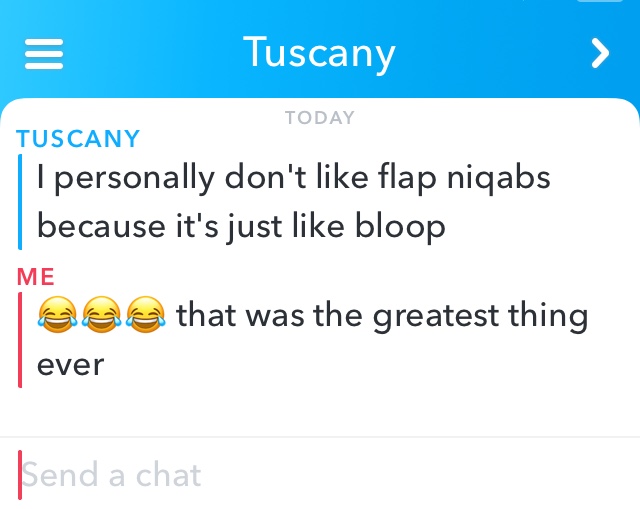
I was skeptical about the flap niqab. While I like to veil my eyes to help with my light sensitivity, the flap niqab, or makeup niqab as it's also called, seemed more like an intrusion. Indeed, it's designed to cover the eyes more fully, and is used to hide makeup by some sisters, hence it's nickname. I was also concerned whether or not I would like its ascetic on me; while I wear niqab, I don't subscribe to the belief system that all beauty should be veiled or hidden and that we should dress in such a way which is plain or even ugly. To quote my friend Tuscany, they are "like bloop."


So how did I find it?


Not bad! Yes, sometimes it can be "like bloop," and definitely I have to wear eyeliner more with a flap niqab or my eyes seem to disappear entirely, but I actually like how it covers more while being effortless!


Example of the niqab being more "bloop."


What is also nice is you are able to change the level of coverage provided by shifting the flap up or down. It can even flip up to be hidden with a headband if you don't want the flap that day, or just flip it up without securing it for driving and other activities!

The flap can be pulled forward/down to cover the eyes.

One thing I noticed about wearing flap niqab for the first time, is it's a lot like wearing glasses for the first time: you have to get used to being able to see objects, in this case fabric, in your close peripheral. This can make your eyes hurt and cause a slight headache the first few times you wear it, but bi'idhnillahi you adjust and get used to it, alhamdulillah, and the headache goes away.

Now, let's review this specific niqab! Like other niqabs, flap niqabs come in both one layer and multi-layer, and there are even some websites which sell just stand-alone flaps so you can convert your existing one-layer niqabs and half niqabs into flap niqabs. The Zaynab is a shorter three-layer niqab, as shown below, and has a similar composition as my Tasnim collection niqab, where the veil layers are connected.
The veil layers, as you can slightly see in the picture, goes about to my waist or hips. The front of the niqab goes half-way down my torso, which is a lot shorter than most other niqabs I have purchased. The eye opening is also less wide than the openings in my other niqabs, which makes it more difficult for glasses wearers to use this niqab. 

The ideal person for this niqab would be someone petite. I'm not sure how tall or petite Iman, the owner of Simply Veiled, is, but the way the niqab is made leads me to believe she is about my size. Even the ties are shorter, to the point that I cannot create a full bow when tying the niqab. For reference, I am about the size of a 12-14 year old girl and wear childrens' hats, headbands, and glasses generally.

The niqab itself is well made, with the same fabric used by Sunnah Style, and one could easily get around the issues mentioned above. Eye openings can be widened (check out my review of my niqab from Misk of Jannah here) and the niqab can be secured using pins or by lengthening the ties. So if you aren't child sized, don't fret - you can still wear this niqab, in shaa Allah! You just may have to put a tiny bit more work in first. Which isn't much of an issue, especially when you consider the price! At just $15.99, this is the most affordable three layer niqab I've ever purchased. 

Veil layers are connected rather than sewn separately.
The reason these niqabs are so affordable is that Iman is trying to phase them out of production and no longer wishes to make and sell niqabs. As such, she is currently working on selling the stock of niqabs she still has. All of her niqabs are also available in multiple colors.

So if you are interested in trying out a flap niqab, or if you want to support a Muslimah business in the US, check out Iman's shop!

To purchase this niqab, go here.


Jazakum Allahu kheiran!

Sajida.


Friday, July 27, 2018

#GRWM: Algerian Style!


Assalaamu alaikum!

Today I bring you the absolutely beautiful style of covering, al-hayek, from Algeria. I fell in love with this style when I saw pictures on Pinterest. It's just so exceedingly elegant! I hope that my look was able to give it justice!


Women in hayek both with and without niqab, and Western clothing.
al-Hayek is a look from Algeria, typically consisting of a white half-niqab which is half plain with lace on the bottom half and a white sheet-like covering used as a jilbab (outer clothing). In recent years the hayek has seen a resurgence in Algeria with young women trying to bring back and preserve their culture. While many women wear it without a hijab underneath, it can easily be worn with hijab, as shown in my video. Some women also wear it without the niqab, but most do veil the face with it even if the hair is shown.


Woman in hayek with white niqab but no hijab. Edges are scalloped and designed, and she appears to be wearing casual Western clothing underneath. 


Hayek with white karakou underneath.
Additionally, the other traditional Algerian outfit I re-created, the karakou, is a combination of an elegantly embroidered jacket or vest, typically with a contrasting belt and worn with a skirt or sarouel which comes up on the sides showing part of the calf. For this part I used a jacket which was thrifted, and and sarouel from al-Moultazimoun, which can be purchased here.

To wear al-hayek, first you need to find a white or off-white sheet or table cloth, usually with stripes or a checkered pattern like the one I purchased from a thrift store. If you are able to actually get a hayek from Algeria, they are very beautiful and some have lace or scalloped edges. The sheet used should be slightly rectangular for ease.

Here is the cloth I bought. It is about 5'x7'
To wrap al-hayek, wrap the cloth around you from behind. Take the upper edge and fold it over on the outside to a comfortable length.


Take a pin and pin to one side, near the armpit. You can either pull it in a bit on each side for pinning, making it tighter (as I showed in the video)  or you can pin closer to each corner, making it easier to pull over the head.

Here is a picture of it wrapped looser.
Reach behind you and pull the folded portion of the hayek up over your head. It can be held open, as shown in one of the pictures I pulled from pinterest (above), or it can be clutched under the chin to cover the chest for hijab. You can also pin under the chin like hijab in order to free up the hands while wearing hayek so purse, groceries, etc. can be carried more easily.
Hayek wrapped tightly and clutched under the chin.

In Algeria, many women wear al-hayek with high heels, adding to it's elegant appeal. But it is also worn with casual clothing and sneakers, making it versatile. The fact that it is pinned to the chest makes it much easier than some other coverings as this can't get unraveled or simply fall off, alhamdulillah. Instead it is easy to move while still being secure. 

Hayek with heels and mlaya.
Woman wearing mlaya.
In Algeria, el-hayek has a counterpart, called mlaya. Mlaya is worn in Constantine and consists of the same white niqab (or a black one) and an overhead garment which is sewn at the bottom. It is then held together at the top under the chin, similar to al-hayek and chador. This garment, however, is black and is seen less often than al-hayek as it is central to Constantinian tradition and culture instead of general Algerian culture. 


Now a bit on my choices. One of the reasons I went with karakou, other than it also being a traditional Algerian garment, is because of pictures like these. In the early 1900s women in Algeria wore al-hayek with poofy sarouel rather than the skirts worn with karakou today. For those of us who try to keep our legs covered, sarouel are a great option to wear with with karakou and other similar types of outfits! Her we see two women in al-hayek in the poofy sarouel and flat shoes. Other images confirm that a century ago most of the hair was covered with al-hayek (some did show a bit of hair) and sleeves of clothing underneath this overgarment reached about to the elbow, as shown in the picture above. As for the heels, this is a choice based upon how many women are seen wearing al-hayek today. And the white niqab I used is a medical-mask style niqab which was gifted to me by a friend. 

Thank you all so much for reading/watching and I really hope you learned something interesting! In shaa Allah more videos and blogs on cultural hijab/niqab will be coming soon!

Jazakum Allahu kheiran,
Sajida. 
Close up of the pin I used.


Monday, July 16, 2018

Wait... You can SWIM?! - How to create your own "burkini"


Assalaamu alaikum!

So, it's mid-July and swim season is in full-swing! Even though I've only gotten to go once. But I bet I know a lot of sisters out there who to go way more often! I love swimming but really I love suntanning more, even if it's only my feet getting tan.

Swimsuit #1
On that note, there is a lot of questions surrounding Muslim swim attire! So often people ask me, "Wait, you have a swimsuit you can wear?" And other friends, they want to know where I got mine or how I put it together. On the market, you can buy ready-made modest swim clothing, from "Christian" covering to almost elbow and knees, to tzniut (Jewish modesty) covering elbows and knees, to Islamic swimwear. But the downside is, whenever I see most of these swimsuits, they are $40 or more, and to me, they just aren't cute! Sure they are for probably most sisters (your choices tend to be either sporty or pastel and feminine), but for a goth/alternative girl, they just wouldn't do.

So then, what are your options?

See? Swim bra had to go. Plus I like more length.

My favorite? THRIFT STORES!!!

To be honest, only two pieces of my swimsuit are from the thriftstore: The leggings with the spikes and a sports bra (some ladies may be able to go without but my old swimsuit had to be with underwire! and wearing it with my suit seems... well after I hit the water, it isn't so modest anymore. Hence switching out my swim bra for a sports bra when I wear the skirt). HOWEVER, I've since found all of the pieces I used to create my original swimsuit in the thrift store!

So, what do you need?

- Leggings
- Rashguard (this is a longsleeve workout shirt, also used by surfers)
- Swim skirt or a comfy dress for added modesty

I tried to make sure that all of my things felt like "swimsuit fabric". This gives people less of a reason to hassle you (apparently a Delaware pool just had to apologize because they forced Muslim children in cotton clothing to not swim, due simply to them not wearing swim fabric; I've gotten hassled just because people aren't accustomed to covered women and my recreational therapist raised concerns about mobility). Swimsuit fabric is a polyester fabric and usually has a shiny, slinky feel, like lycra. (So everyone is aware, ALL POLYESTER should be able to be used in a standard swimming pool with chlorine without any fading.)

Swimsuit #2
So, let's break down my swimming #OOTD:

- Leggings - Thrifted, but originally Forever21
- Rashguard - Walmart or Target, I don't remember
- Swimskirt - Walmart or Target, I don't remember
- Dress - My co-wife's favorite truck stop (not even a lie!)
- Swim hijab/niqab - made by me

Like I said, whether you go for a swim skirt or a dress (or if you manage to find one of the magical skirted rashguards), you can get all of the actual swimsuit (not the hijab) easily and much cheaper than buying a ready-made burkini. It's extremely affordable to do so, especially if you want something to swim in while still trying to find all of your perfect pieces!

Another thing that can be utilized outside of swim season are apps and websites like Wish and dresslily, where you can order leggings, rashguards, or even actual burkinis for very cheap, so long as you are willing to wait about a month to receive your order!

So, what if money isn't an issue, but ready-made burkinis aren't your thing? Where should you look that isn't Walmart, Target, or an athletics store? Where are some places to get pieces that are *really* cool?

If you can afford it, I highly encourage people to check out blackmilkclothing.com! Carrying everything from leggings to full dresses to hoodie dresses and more, nearly everything sold on blackmilkclothing.com can be used for swimwear! And they definitely are super unique in every way. (I would like to note that BlackMilk DOES carry bodysuits! Easy to add a skirt to for extra modesty and just jump in the pool!)

Now, that's not to say there aren't *some* ready-made burkinis that I think are cool. Unfortunately, when when I started my journey, they were just increasingly few and far between, and the ones that I found and actually liked were more expensive than I could afford.

If you can afford a ready-made burkini and don't want the hassle that comes with piecing together your own, here is a list of websites you can check out, in shaa Allah:

Nabira has lots of swimwear ranging modesty spectrum in a variety of styles and prices.
Jilbab Mina has swimwear in the French jilbab style.
Mayovera has nicer burkinis in TONS of styles, as well as partial cover suits, for a higher price (you'll need to convert Turkish lira to your currency of choice).

And, of course, women all over Saudi Arabia still swim in a regular abaya, hijab, and niqab. So just do what works for you.

Jazakum Allahu kheiran,
Sajida.


Monday, July 2, 2018

Why I Actually Like Afghani Burqa (WAY more than I thought I would!)


 Assalaamu alaikum everybody! It's been a while since I decided to stay mostly off of social media during Ramadan, and since then I have been working on my disability claim. 

At the beginning of Ramadan I received a bright purple burqa, or topi as it's called in Pakistan. I ordered it because it was a resale on eBay and therefore WAY cheaper than the normal listings for the same piece. My plan was to compare this one, which you can readily find online, and a burqa straight from Afghanistan, which my friend is sending (and which we are having difficulty getting into the US, but that's a whoooole other story) in order to see how comparable they are, which breathes better, etc.. In shaa Allah I'll still be able to do that post. (We just finished attempt number two on sending the blue burqa from the UK and now her family is going to try and send it straight from Afghanistan.)

Me outside reading.


So, I started wearing the burqa during Ramadan. I'm not wearing it all the time, which is apparent just by a quick look at my Instagram. 😉 I started by wearing it when I went to sit outside and read Quran, as the house next us and the house next to that are both on sale and doing construction so there were a lot of guys around. Surprisingly, it wasn't oppressively hot, which was our worry! After a week or so I went out on date day with my co-wife and wore the burqa. We got Taco Bell and all people said was how cute I was and how much they loved the color of my burqa, and asked why I was wearing it, etc.

In fact, the ONLY comments I've gotten on my burqa have been compliments!

Me at Taco Bell waiting for food lol
Since then I've worn it out a few times. A friend who came over shortly after I got it commented that it would be perfect for just throwing it on and going to the grocery store or other errands. And she's right! If I don't want to search for a scarf, abaya, and niqab when we need to go out, I can just throw on the burqa and it's all of that in one! Alhamdulillah. Errands, shopping, using a cane or wheelchair, I have been able to wear my burqa in all of these situations, easily! (Just don't go out wearing shorts in it as it's hard to keep your legs from showing, especially when it's windy 😅) It also is much easier to see out of than I thought it would be, while still filtering out most light (which helps my light sensitivity).

Every time I've worn it, no one says anything rude. Subhan'Allah. I don't know why it is this way, but percentage-wise I've gotten more insults in just niqab than in burqa. Maybe I need to give it more time, but our initial thought is that I would be even more at risk than before. Apparently all I'm at risk for is having my eye screen super crooked, which my loving Husband decided to point out in the line at Subway. But, subhan'Allah w bihawmdihi, the guy making our sandwiches complimented my burqa and the color, and then we found how he is from Afghanistan. Ma shaa Allah. We plan to go back to that Subway in the future, in shaa Allah, just to see him again. Allahumma barik lahu.


So, all-in-all, the burqa is just way more comfortable and versatile than we ever thought it would be, and way easier than finding all of the individual pieces I need to go out when I'm still working through all of the laundry (alhamdulillah I finished it all last night 😪) and I lose my niqabs CONSTANTLY. 

In shaa Allah I'm going to be doing some shoots which will showcase the burqa. Once I do, you all will know! I'll make a blog post once I get them in. In the mean time, I hope that my words and pictures here today help people to understand and embrace the burqa as a form of covering. 💕

And stay tuned for more awesome burqa pictures and fashion posts and reviews coming up soon, in shaa Allah! For access to all of my media posts, follow me on Facebook by searching @RivkaSajida
😘


Jazakum Allahu kheiran, 
Sajida.


Stole my co-wife's flower crown and put it on when we had to go back into Petsmart a second time lol


Thursday, May 17, 2018

#GRWM - Pakistani Style!


Assalaamu alaikum everyone! My apologies for this going up a couple days late - as I'm sure you all were doing, I was preparing for Ramadan, and then yesterday I fasted plus had doctors appointments, etc.

So!

Today's Get Ready With Me is Pakistani style, in honor of my largely Pakistani local community (looking at all of my Aunties except my Khala). <3


So, the shalwar suit featured in the video was a gift from a Pakistani Auntie who owned a clothing store. It consists of the orange shalwar, a inner liner which can also be used as a plain kameez (as in the beginning of the video), the kameez itself, and the dupatta, shown in the picture above. Cream and orange don't always work well with my skin - I tend to look sickly because it brings out more of my olive tones while also making me look very very pale. So I gave it to my friend Azrah, pictured above. Check out her blog at https:niqabibi.wordpress.com!

For a long time I wondered how my Khala did her niqab in the masjid. I saw other Desi Aunties doing it as well, but could never get it to work for me. Finally I realized whenever I see my Khala do it, her hair is down or a very low bun (she doesn't have long hair like me)! This must be how the other Aunties do it as well, because this is the only way I've gotten it to work. 😅 The style requires you to have you ears showing at first, which is something I've seen other Desi sisters do just with the hijab or dupatta in order to help keep it in place, or as habit.

First take your dupatta or scarf and place it over your head, with one short side and one long side. 

Tuck the scarf behind your ears.

Take the long side and, keeping it tucked behind your ear, draw it across your face. 

Bring the scarf around the back of your head (as you can see, my hair is NOT in a bun)

Take the extra fabric near your ear and cover your ear with it. (This is optional but I prefer to cover my ears.

Tuck the end of the scarf into the side, next to your ear.


So there we have it! A quick and easy niqab style seen casually in many Desi communities! While it doesn't work for fancier events, it works well in the masjid in order to cover the face when walking through common space or past the men's area. 

Ramadan Mubarak to all of my lovely friends and family within my community, and thank you SO MUCH for your support and inspiration and love. May Allah ta'ala bless you and reward you generously and accept all of your ibada during this holy month. Ameen!


Jazakum Allahu Kheiran
Sajida.